
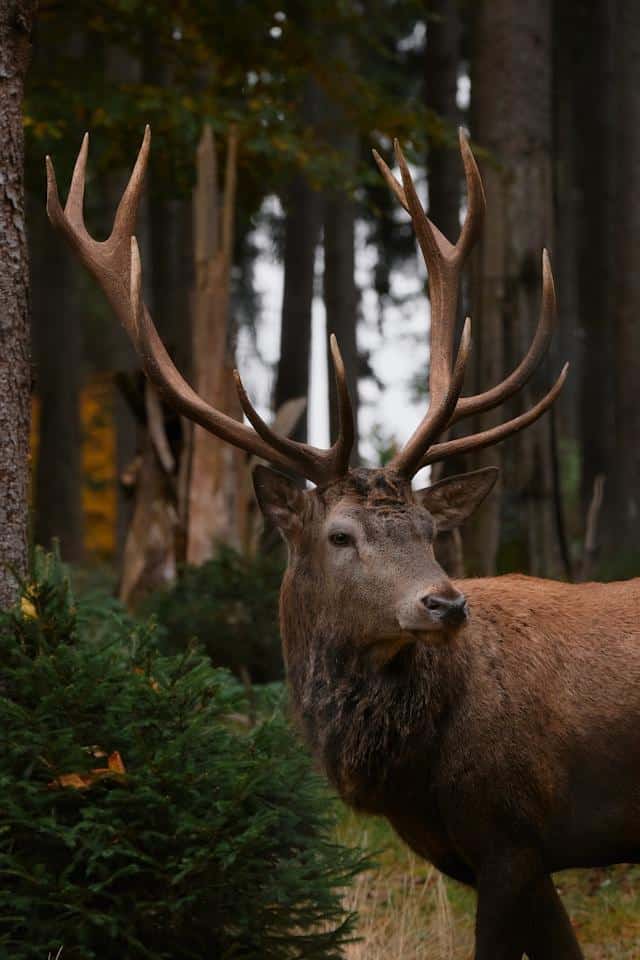
When the sun disappears behind the trees, a forest may seem to become quiet and empty. In reality, night transforms the woodland into a completely different world. Animals that remain hidden during daylight begin to emerge, insects fill the air, frogs call from streams and ponds, and predators quietly search for prey among the shadows.
Nocturnal forest life is remarkably diverse. Some animals have evolved exceptional hearing, smell, night vision, or sensitivity to movement that allows them to navigate darkness. Others rely on moonlight, stars, vibrations, or chemical signals to find food and communicate.
The nighttime forest is not simply the daytime forest with fewer people around. It is a different ecological environment with its own rhythms, behaviors, and relationships. Discovering what happens after dark reveals another side of woodland ecosystems and shows just how active forests can be when most human visitors have gone home.
Why the Forest Changes After Sunset
Light is one of the most important factors influencing animal behavior. During daylight, visual hunters can easily locate prey, while many smaller animals risk being detected by predators.
Darkness changes those relationships.
Some species become more active because the cover of night makes them less visible. Others avoid nighttime activity because they depend heavily on vision. As a result, different animals occupy the forest at different times.
This separation of activity can reduce competition between species and allow animals to use the same habitat in different ways. A forest may therefore support one community of animals during the day and another after sunset.
Temperature also changes at night. In many forests, cooler conditions can make activity easier for certain animals, particularly during hot seasons. For insects and amphibians, nighttime humidity may also create favorable conditions.
Owls: Silent Hunters of the Darkness
Few animals are more closely associated with nighttime forests than owls.
Many owl species are adapted to hunting in low-light conditions. Their large eyes help them gather available light, while their highly developed hearing allows them to detect prey even when visibility is limited.
An owl’s facial structure helps direct sound toward its ears. Some species can locate small animals moving beneath leaves or vegetation largely through sound.
Their specialized feathers also contribute to quiet flight. The structure of the feathers helps reduce the noise produced by air moving across the wings, allowing owls to approach prey with remarkable stealth.
Depending on the species and habitat, forest owls may hunt rodents, insects, amphibians, reptiles, or small birds.
Hearing an owl’s call in a dark forest is therefore more than a mysterious nighttime sound. It may be the signal of a highly specialized predator actively working within the ecosystem.
Bats Take Flight
As darkness arrives, bats may emerge from tree cavities, caves, buildings, or other roosting locations.
Many forest bats are insectivores. They hunt moths, beetles, flies, mosquitoes, and other flying insects, using echolocation to navigate and locate prey.
Echolocation involves producing high-frequency sounds and interpreting the returning echoes. This remarkable biological system allows bats to detect objects and prey even when visual information is limited.
Bats can travel through complex forest environments while avoiding branches and other obstacles. Their nighttime feeding also connects them to the wider food web.
Some bats in different parts of the world feed on fruit or nectar rather than insects. These species can contribute to seed dispersal or pollination.
The diversity of bats demonstrates that nighttime forests are not dominated by a single type of animal. They contain specialists adapted to many different ecological roles.
Foxes on the Forest Floor
Foxes can be active during the night, although their activity patterns vary by species, location, and individual behavior.
Their excellent hearing and sense of smell help them locate food in low-light conditions. Foxes may hunt small mammals, birds, insects, and other animals, while also consuming fruits and other plant material.
Moving quietly through vegetation, a fox can investigate sounds and scents that would be difficult for humans to detect.
As adaptable omnivores, foxes can use different parts of a forest ecosystem depending on what food is available. Their presence contributes to the complex network of predator-prey relationships that operates after dark.
Deer and Other Herbivores in the Shadows
Large herbivores are not necessarily asleep when nighttime arrives.
Deer and related animals may feed during the evening and early morning, browsing on leaves, shoots, grasses, fruits, and other vegetation. Their movements can carry them across considerable areas as they search for food.
Nighttime activity can help some herbivores avoid the heat of the day or reduce exposure to human activity in landscapes where people and wildlife overlap.
As they feed and move through the forest, these animals also influence vegetation and transport seeds. They become part of the food web by providing prey for large predators where those predators naturally occur.
The Secret World of Amphibians
Forests can become especially lively after dark when frogs and salamanders emerge.
Amphibians often benefit from cool, moist nighttime conditions. Frogs may move toward ponds, streams, temporary pools, or damp vegetation, while salamanders can search through leaf litter and beneath logs.
Frog calls are among the most recognizable sounds of nighttime forests. These calls are often produced by males attempting to attract mates or establish breeding territories.
Moisture is particularly important for amphibians because their skin plays a major role in respiration and water balance. Healthy forests with streams, wetlands, leaf litter, and shaded habitats can therefore provide valuable conditions for amphibian populations.
Listening to frogs at night can provide a reminder that a forest’s biological activity continues even when visibility is almost nonexistent.
Moths: Nighttime Pollinators
Many people associate pollination with bees and butterflies during the daytime, but moths can contribute to pollination after sunset.
Some moth species visit flowers at night to feed on nectar. As they move between blossoms, pollen can attach to their bodies and be transferred to other flowers.
Certain plants have evolved nighttime characteristics that attract moths, including strong fragrances and pale flowers that are easier to detect in low light.
Moths are also important prey for bats, birds, spiders, amphibians, and other animals. Their role in the nighttime food web is therefore much larger than their quiet appearance might suggest.
Spiders Build Their Nighttime Traps
Many spiders are active at night, although species differ greatly in behavior.
Some web-building spiders construct or repair their webs during evening hours. Their webs can become highly effective traps for moths, flies, mosquitoes, and other flying insects.
Other spiders actively hunt without webs. They may move across leaves, tree bark, or the forest floor in search of prey.
Spider activity contributes to natural insect population regulation and provides food for other forest animals.
A web sparkling with morning dew may therefore be evidence of a nighttime construction project completed while the forest was dark.
Insects Come Alive After Dark
The nighttime forest can contain an extraordinary variety of insects.
Moths may fly around flowers or tree canopies. Beetles can search through leaf litter and decaying wood. Crickets and other insects produce sounds that travel through the darkness.
Many insects use chemical signals, sounds, vibrations, or light to communicate.
Fireflies are among the most famous examples. Their bioluminescent flashes can be used in courtship and communication. Different species have different flashing patterns, creating a remarkable nighttime display.
Insects are essential components of forest food webs. They pollinate plants, consume vegetation, decompose organic material, prey on other insects, and provide food for larger animals.
The Forest Floor Becomes a Busy Highway
During the day, sunlight makes it easier to notice trails, leaves, fallen branches, and other features of the forest floor. At night, these same areas become hidden pathways.
Small mammals can move through leaf litter searching for seeds, fruits, fungi, or insects. Rodents may emerge from sheltered locations, while carnivorous mammals follow scents left by potential prey.
Earthworms and other soil organisms continue processing organic material, largely unaffected by the absence of sunlight.
Fallen logs can become especially important nighttime habitats. They provide shelter and food for insects, amphibians, reptiles, and other small creatures.
The forest floor is therefore far from inactive after dark. It becomes a complex network of movement, feeding, hunting, and communication.
How Animals Find Their Way in Darkness
Humans depend heavily on vision, but many nocturnal animals use other senses to navigate.
Smell is particularly important for mammals. A fox can detect scents that humans would never notice, helping it locate food and identify other animals.
Hearing is essential for owls, bats, rodents, and numerous insects. Vibrations can also provide information about nearby movement.
Some animals use echolocation, while others rely on memory and familiar routes through their territory.
These adaptations demonstrate that darkness is not necessarily a disadvantage for animals that have evolved to live in it. A nighttime forest may look almost completely black to human eyes while remaining full of information for its inhabitants.
Why Darkness Matters to Forest Wildlife
Natural darkness is an important environmental condition.
Artificial light from roads, buildings, signs, vehicles, and other sources can alter the behavior of nocturnal animals. Some insects are attracted to artificial lights and may spend excessive amounts of time around them. This can interfere with feeding, reproduction, and movement.
Artificial light can also change the behavior of animals that hunt or avoid predators at night.
For this reason, reducing unnecessary outdoor lighting can help protect nighttime ecosystems. Using lights only when needed, directing them toward the ground, and choosing appropriate brightness can reduce unnecessary disruption.
Dark skies are not only valuable for observing stars. They are also part of healthy nighttime habitats.
Nocturnal Predators Help Balance Forest Ecosystems
Predators are important at every hour of the day, but nighttime predators play specialized roles.
Owls, bats, foxes, snakes, wild cats, and other nocturnal hunters may feed on insects, rodents, amphibians, birds, or other animals depending on their habitat.
Predation helps shape animal populations and behavior. Prey species may avoid certain areas or change their activity patterns when predators are nearby.
These relationships contribute to the structure of the forest food web. Removing a predator can sometimes have effects that extend to species lower in the food chain.
The nighttime forest is therefore a place where ecological balance is constantly being shaped by interactions between hunters and their prey.
Seasonal Changes After Dark
Nighttime activity also changes with the seasons.
In spring, frogs may gather around breeding ponds, while insects become increasingly active as temperatures rise. Summer nights can be filled with bats, moths, crickets, and other creatures.
Autumn brings changes in food availability. Some animals take advantage of fruits, nuts, and seeds before winter arrives, while others prepare shelters or migrate.
Winter dramatically changes nighttime forest life in colder regions. Some animals become less active, some hibernate or enter periods of reduced activity, and others continue searching for food beneath snow or among evergreen vegetation.
The nighttime forest is therefore not the same throughout the year. It follows seasonal rhythms just as the daytime ecosystem does.
How Humans Can Observe the Night Forest Responsibly
Exploring a forest at night can be fascinating, but wildlife should always be treated with respect.
Visitors should follow local regulations, stay on permitted trails, avoid disturbing nests and dens, and keep noise to a minimum. Bright lights can disrupt animals, so using the lowest practical light level is preferable.
Red-filtered lights are sometimes used by wildlife observers to reduce glare, although they do not eliminate all effects of artificial illumination.
Listening can often be more rewarding than trying to find every animal. An owl call, frog chorus, rustling leaves, or the sound of wings can reveal the presence of wildlife without requiring close approach.
The goal should be observation rather than interference.
Why We Should Protect Nocturnal Forest Life
Protecting nighttime wildlife requires protecting the forest itself.
Healthy forests provide nesting sites, roosting locations, food sources, water, shelter, and connected habitats. Preserving mature trees, natural vegetation, wetlands, streams, and fallen wood can benefit a wide range of nocturnal species.
Reducing habitat fragmentation is also important. Roads and development can divide forests into isolated patches, making it harder for animals to move safely between areas.
Responsible land management, protected areas, habitat restoration, and careful use of artificial lighting can all contribute to healthier nighttime ecosystems.
A Forest Has Two Worlds
One of the most fascinating things about forests is that they change depending on when we visit.
During daylight, birds and squirrels may dominate the visible landscape. Flowers open, insects move between plants, and larger mammals may browse through vegetation.
After sunset, a different cast of characters takes over. Owls begin hunting, bats sweep through the air, moths search for flowers, frogs call from wet places, and mammals quietly move through the shadows.
Neither world is more important than the other. They are interconnected parts of the same ecosystem.
Many animals that appear active only at night depend on resources created during the day, while their nighttime activities influence what happens when the sun rises again.
Conclusion
Nocturnal forest life reveals just how much activity can exist beyond human perception. Darkness does not bring the forest to a standstill. Instead, it opens the door to a different community of animals and behaviors.
Owls hunt by sound, bats navigate with echolocation, foxes follow scents, frogs call from damp habitats, moths visit nighttime flowers, and countless insects move through the canopy and leaf litter.
These animals perform essential ecological roles. They pollinate plants, control prey populations, disperse seeds, recycle nutrients, and provide food for other species.
The next time a forest seems silent after sunset, remember that silence can be deceptive. Hidden among the trees is a world of movement and communication that has been operating long before humans began studying it.
Nighttime is not the absence of forest life. It is another chapter of the forest’s story—one that begins when the sunlight fades.

