
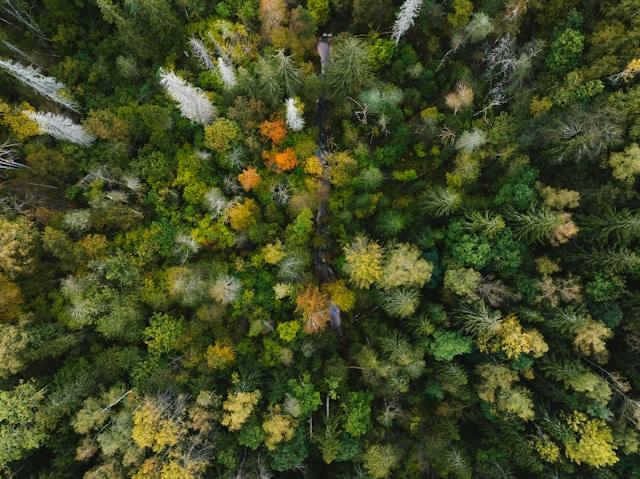
Nature is often divided into separate parts when we study it. We talk about forests, rivers, animals, plants, soil, insects, and the atmosphere as though each exists independently. In reality, these components are deeply connected. A change beneath the soil can influence a tree’s growth, which can affect insects and birds, alter the movement of water, and even influence the air above the forest.
From soil to sky, ecosystems function through countless relationships. Nutrients move between living organisms and the ground. Water travels from soil to roots, from leaves into the atmosphere, and eventually returns as rain. Sunlight powers plant growth, while plants provide energy for animals. Dead organisms return nutrients to the soil, beginning the cycle again.
This interconnectedness is one of the most remarkable features of the natural world. Understanding how every part of an ecosystem works together helps explain why biodiversity, healthy soil, clean water, and functioning habitats are essential for life.
What Makes an Ecosystem?
An ecosystem consists of living organisms and the nonliving environment with which they interact.
Living components include plants, animals, fungi, bacteria, insects, and other microorganisms. Nonliving components include sunlight, water, air, soil, minerals, temperature, and climate.
These components constantly influence one another.
A forest tree, for example, needs sunlight, water, carbon dioxide, and nutrients to grow. Its leaves provide food for insects, its branches provide shelter for birds, and its roots interact with fungi and microorganisms underground. When the tree drops leaves, those leaves become food for decomposers, which return nutrients to the soil.
One organism’s activity can therefore become another organism’s resource.
The Sun: The Starting Point for Most Food Webs
The story of an ecosystem often begins with sunlight.
Plants, algae, and some microorganisms capture solar energy through photosynthesis. They use this energy to convert carbon dioxide and water into organic compounds that support their growth.
This stored energy then moves through food webs.
Herbivores consume plants. Predators consume herbivores or other predators. Decomposers break down dead organisms and return nutrients to the environment.
Sunlight therefore provides the energy that supports most ecosystems, while plants act as the primary bridge between solar energy and living communities.
Plants Connect the Soil and Sky
Plants are uniquely positioned between the ground and atmosphere.
Their roots reach into the soil, where they obtain water and nutrients. Their leaves extend toward the sky, where they capture sunlight and absorb carbon dioxide.
Through photosynthesis, plants connect these two worlds.
Water absorbed by roots travels upward through stems and leaves. Carbon dioxide from the atmosphere becomes part of plant tissue. Oxygen produced during photosynthesis is released into the air.
Plants also release water vapor through a process called transpiration.
In this way, a single tree can influence both the underground environment and the atmosphere around it.
The Hidden World Beneath the Soil
Soil is far more than dirt. It is a living environment containing minerals, organic matter, air, water, roots, fungi, bacteria, insects, and countless microscopic organisms.
Healthy soil supports plant growth by providing water, nutrients, and physical support.
Roots interact with soil organisms and release compounds that influence microbial communities. Fungi can form relationships with plant roots, helping plants obtain nutrients and water.
As roots grow and die, they add organic matter to the soil. This contributes to soil structure and creates resources for decomposers.
The soil is therefore an active part of an ecosystem rather than simply a place where plants happen to grow.
Roots: Nature’s Underground Network
Plant roots anchor vegetation and absorb essential resources, but their ecological role extends much further.
Roots create channels through soil that can improve water movement and aeration. They also help hold soil together, reducing erosion.
Root systems can spread over large areas, connecting plants to complex communities of microorganisms.
Some fungi grow alongside roots and extend into surrounding soil. These fungal networks can increase the effective area through which plants obtain nutrients and water.
The result is a dynamic underground environment in which roots, fungi, bacteria, and other organisms interact continuously.
Fungi Connect Living and Dead Matter
Fungi are essential links between different parts of an ecosystem.
Some fungi form partnerships with living plants, while others break down dead wood, leaves, and animal remains.
When fungi decompose organic material, they release nutrients that can eventually be used by plants.
This creates an important cycle. Plants grow using nutrients from the soil, animals consume plants, organisms die, and fungi help return nutrients to the environment.
Without decomposers, nutrients would remain locked inside dead organic matter.
Bacteria: Tiny Engines of Nutrient Cycling
Bacteria are microscopic, but their influence on ecosystems is enormous.
Different bacterial communities participate in decomposition, nitrogen cycling, carbon cycling, and other biological processes.
In soil, bacteria help break down organic matter and transform chemical compounds. Some form relationships with plants, while others live freely in the environment.
Aquatic ecosystems also depend heavily on bacteria. They help recycle nutrients and form the foundation of many microscopic food webs.
Although they cannot usually be seen without a microscope, bacteria are essential to the functioning of nearly every ecosystem.
Water Connects the Entire Ecosystem
Water is one of nature’s greatest connectors.
Rain falls onto forests, grasslands, mountains, wetlands, and cities. Some water enters the soil, some flows into rivers and lakes, and some returns to the atmosphere through evaporation and plant transpiration.
Plants absorb water through their roots and transport it to their leaves. Animals obtain water by drinking or consuming food.
Eventually, water returns to the environment through respiration, excretion, decomposition, and other processes.
The water cycle connects the atmosphere, soil, plants, animals, rivers, oceans, and groundwater.
Trees and the Water Cycle
Trees can have a major influence on local water movement.
Their roots absorb water from the soil, while their leaves release water vapor into the atmosphere through transpiration.
Tree canopies can also intercept rainfall. Some water evaporates from leaves and branches, while some travels down trunks or reaches the ground gradually.
Forest soils often contain large quantities of organic matter and root channels that influence how water moves through the landscape.
When forests are removed, these processes can change. Water may run off more rapidly, increasing erosion and altering streams.
Protecting forests therefore helps preserve not only habitats but also important components of the water cycle.
Animals Move Energy Through Ecosystems
Animals connect different levels of an ecosystem through feeding relationships.
Herbivores transfer energy from plants into animal tissue. Predators consume herbivores, moving that energy further through the food web.
Animals also transport nutrients and seeds.
A bird may eat fruit in one location and deposit the seeds elsewhere. A grazing animal may consume vegetation and later return nutrients to the soil through waste.
Even migration can connect distant ecosystems by moving organisms, nutrients, and energy across large geographical areas.
Pollinators Connect Plants and Animals
Many flowering plants depend on animals for pollination.
Bees, butterflies, moths, birds, bats, beetles, and other organisms visit flowers to obtain food. As they move between flowers, they can transfer pollen.
This allows plants to reproduce.
In return, pollinators receive nectar, pollen, or other resources.
This relationship illustrates how the survival of one group can depend on another. A decline in pollinator populations can affect plant reproduction, while the loss of flowering plants can reduce food availability for pollinators.
Seed Dispersal Connects Plants Across Landscapes
Plants have developed many methods of spreading their seeds.
Some seeds are carried by wind or water. Others are transported by animals.
Birds and mammals can eat fruits and carry seeds to new locations. Seeds may also attach to animal fur or be moved through animal activity.
Seed dispersal allows plants to colonize new areas and reduces competition between seedlings and their parent plants.
Animals therefore serve as important transportation systems for plant life.
Predators Connect Different Levels of the Food Web
Predators help regulate populations of other animals.
If predator populations decline significantly, certain prey species may become more abundant. Increased prey populations can then place greater pressure on vegetation or smaller organisms.
Predators can also change animal behavior. Prey may avoid certain habitats where predators are common, indirectly influencing grazing patterns and plant growth.
These effects demonstrate that predators influence ecosystems not only by what they eat but also by how other animals respond to their presence.
Dead Matter Is the Beginning of a New Cycle
Death does not represent the end of an organism’s ecological role.
When plants and animals die, their bodies become resources for decomposers, scavengers, insects, fungi, and microorganisms.
Leaves fall to the ground. Fallen branches become habitats for insects and fungi. Dead animals provide food for scavengers and decomposers.
Eventually, organic material is broken down and its nutrients return to the soil, water, or atmosphere.
The cycle then begins again as plants absorb those nutrients.
This constant recycling is one of the foundations of ecosystem health.
The Atmosphere Is Part of the Ecosystem
The air above an ecosystem is not separate from the life below it.
Plants remove carbon dioxide from the atmosphere during photosynthesis and release oxygen. Animals and microorganisms use oxygen during respiration and release carbon dioxide.
Water vapor moves between vegetation and the atmosphere. Nitrogen and other elements also cycle between air, soil, and living organisms.
The atmosphere is therefore an active component of ecosystems.
Changes in atmospheric conditions can influence temperature, rainfall, plant growth, animal behavior, and entire habitats.
How Soil, Plants, and Climate Interact
Soil conditions influence which plants can grow. Plants influence soil formation and organic matter. Vegetation affects local temperature and moisture, while climate influences both soil and plant communities.
These relationships create feedback loops.
For example, healthy vegetation can protect soil from erosion. Healthy soil can support more vegetation. More vegetation can provide habitat for additional organisms, increasing ecological complexity.
If vegetation is removed, soil may become exposed, erosion can increase, and plant recovery may become more difficult.
This illustrates how ecosystem components can reinforce one another in either positive or negative directions.
The Importance of Biodiversity
Biodiversity strengthens the web of ecological relationships.
Different species perform different functions. Some pollinate plants, some disperse seeds, some control populations, and others decompose organic matter.
A diverse ecosystem has a wider variety of biological strategies available to respond to environmental changes.
Biodiversity can also create complex food webs that connect many organisms.
When species disappear, ecological relationships can be weakened or lost. Protecting biodiversity therefore means protecting the connections that keep ecosystems functioning.
What Happens When One Part Changes?
Because ecosystems are interconnected, changes rarely remain isolated.
A prolonged drought can reduce plant growth. Reduced vegetation can affect herbivores. Fewer herbivores can affect predators.
Deforestation can alter soil, water flow, temperature, and wildlife habitat simultaneously.
Pollution entering a river can affect aquatic microorganisms, fish, birds, and animals that depend on the river for water.
The consequences of environmental change can therefore travel through multiple levels of an ecosystem.
Human Communities Are Part of Nature
Humans are also part of ecosystems. We depend on soil, water, plants, animals, microorganisms, and atmospheric processes.
Agriculture depends on fertile soil, pollination, freshwater, and functioning nutrient cycles. Communities depend on forests and wetlands for resources and environmental services.
Human activities can alter ecosystems, but people can also contribute to their protection.
Restoring wetlands, conserving forests, planting native vegetation, protecting wildlife habitats, reducing pollution, and managing resources sustainably can help maintain ecological connections.
How to Protect Ecosystem Connections
Protecting ecosystems requires looking beyond individual species.
Conserving a bird species, for example, may require protecting the forest that provides its food, nesting sites, water, and migration routes.
Protecting a pollinator requires more than protecting the insect itself. It also requires preserving flowering plants and suitable habitats.
Healthy soil requires organic matter, microorganisms, vegetation, and responsible land management.
The most effective conservation efforts recognize that ecosystems are networks rather than collections of isolated parts.
From Soil to Sky: One Connected System
A healthy ecosystem is a continuous cycle.
Sunlight reaches leaves. Plants capture energy and carbon from the atmosphere. Roots draw water and nutrients from the soil. Herbivores feed on plants. Predators feed on animals. Pollinators help plants reproduce. Seeds travel across landscapes. Organisms die, and decomposers return nutrients to the environment.
Water moves from soil to roots, through stems, into leaves, and back into the atmosphere. Nutrients move through living organisms and return to the ground. Carbon moves between air, plants, animals, soil, and microorganisms.
Nothing exists completely on its own.
The soil beneath our feet, the trees around us, the animals moving through habitats, the microorganisms we cannot see, and the atmosphere above all form parts of a single interconnected system.
Why Understanding Nature’s Connections Matters
Recognizing these connections changes the way we understand environmental health. A forest is not simply a group of trees. A river is not merely flowing water. Soil is not just dirt, and wildlife is not separate from vegetation.
Each component contributes to a larger ecological network.
When these connections remain strong, ecosystems can provide habitat, recycle nutrients, regulate water, store carbon, support biodiversity, and sustain life.
When connections are disrupted, the effects can spread far beyond the original problem.
From soil to sky, nature is constantly moving energy, water, nutrients, and life. Every root, leaf, insect, bird, fungus, river, and cloud is part of a much larger story.
The health of an ecosystem depends on these relationships continuing to function. By understanding and protecting them, we can help preserve the remarkable systems that make life possible on Earth.

