
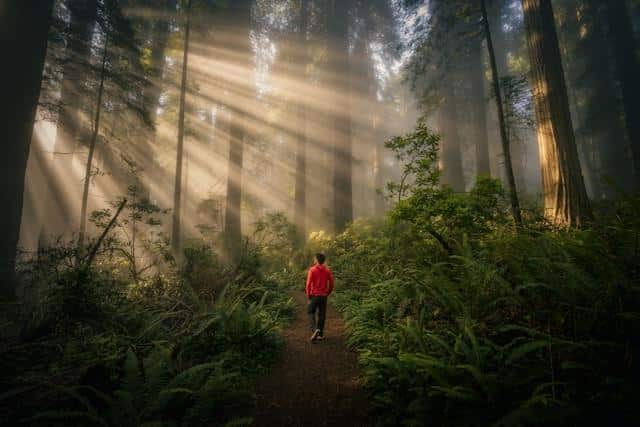
A forest tree may appear permanent when viewed from the ground. Its trunk can stand for decades or even centuries, its branches can stretch high above the canopy, and its roots can spread deep into the soil. Yet every giant tree begins in a remarkably fragile form: a tiny seed.
The journey from seedling to giant is one of nature’s most extraordinary stories. A tree must survive germination, competition, drought, storms, insects, disease, animals, and changing environmental conditions before it can become a mature part of the forest canopy. Along the way, it transforms the surrounding ecosystem by creating habitats, storing carbon, protecting soil, and providing food for countless organisms.
Understanding the life cycle of a forest tree reveals how forests regenerate and why mature trees are so valuable. From the moment a seed begins to germinate to the final stages of an ancient tree’s life, every stage contributes to the complex cycle of forest growth, death, and renewal.
The Beginning: How a Tree Starts From a Seed
Every forest tree begins its life as a seed. Seeds vary dramatically in size, shape, and structure depending on the tree species. Some are tiny and lightweight, while others are large and surrounded by fleshy fruits or protective shells.
A seed contains the genetic information and resources needed to begin a new plant. Many seeds also contain stored nutrients that provide energy during the earliest stages of development.
However, a seed cannot simply grow whenever it lands on the ground. It needs suitable conditions, which may include adequate moisture, appropriate temperature, oxygen, and access to suitable soil or a surface where it can establish.
In forests, countless seeds are produced every year, but only a small percentage successfully become mature trees. This high level of competition is one reason the forest is such a challenging environment for young plants.
Germination: The First Sign of Life
When environmental conditions are suitable, a seed begins to germinate. Water enters the seed, triggering biological processes that allow the embryo inside to resume growth.
The first structure to emerge is usually the root. This initial root anchors the developing plant and begins absorbing water and nutrients from the surrounding environment.
Soon afterward, a young shoot grows upward toward the light. Tiny leaves begin to develop, allowing the seedling to start producing energy through photosynthesis.
At this point, the tree is extremely vulnerable. A seedling can be damaged by drought, extreme temperatures, insects, fungi, grazing animals, or physical disturbance.
Survival during this early stage is one of the greatest challenges in the life of a forest tree.
The Struggle for Sunlight
One of the most important resources for a growing tree is sunlight. Forests can be densely shaded because mature trees capture much of the available light high above the ground.
Young seedlings growing beneath the canopy must adapt to limited sunlight. Some tree species are highly shade-tolerant and can survive for years in low-light conditions. Others require larger openings in the canopy to grow rapidly.
When a mature tree falls, it can create a gap where sunlight reaches the forest floor. This sudden increase in light can trigger a burst of growth among seedlings, shrubs, and other plants.
This process is an important part of natural forest regeneration. The death or falling of one tree can create opportunities for many younger plants.
Developing a Strong Root System
As the seedling grows above ground, its root system develops below the surface. Roots provide stability and absorb water and minerals needed for growth.
A strong root system is especially important during periods of drought. Trees with extensive roots may be able to access water from deeper or wider areas of soil.
Roots also interact with fungi and microorganisms. Mycorrhizal fungi can form relationships with tree roots, helping plants obtain nutrients and water while receiving carbohydrates from the tree.
These underground relationships become increasingly important as a tree grows. Beneath an apparently simple forest floor is a complex ecosystem involving roots, fungi, bacteria, insects, and other organisms.
The Sapling Stage: Growing Toward the Canopy
After surviving its most vulnerable seedling stage, a young tree becomes a sapling. It develops a stronger trunk, larger branches, and a more extensive root system.
The sapling continues competing for sunlight, water, nutrients, and space. Nearby plants may grow faster, while animals and insects can damage leaves and young bark.
Some saplings remain suppressed beneath the canopy for many years. They may grow slowly while waiting for an opportunity to receive more sunlight.
Others find favorable conditions and grow quickly. Their growth rate depends on species, climate, soil quality, water availability, competition, and disturbances.
The sapling stage can therefore last for a relatively short period in some species or many decades in others.
How a Tree Becomes Part of the Forest Canopy
Eventually, a successful young tree may grow tall enough to reach the forest canopy. This is a major turning point in its life.
Above the surrounding vegetation, the tree has greater access to sunlight. Its leaves can capture more energy through photosynthesis, supporting faster growth and the development of larger branches.
Reaching the canopy also changes the tree’s ecological role. Its branches can provide nesting sites for birds, insects, and other animals. Its leaves contribute to food webs, while its roots influence soil organisms.
The tree is no longer simply trying to survive. It has become an important component of the forest ecosystem.
The Growth of a Mature Tree
As a tree continues to grow, its trunk becomes thicker and stronger. Each year, new layers of wood may form beneath the bark, although growth patterns vary depending on species and environmental conditions.
In climates with distinct seasons, annual growth rings can sometimes reveal information about a tree’s history. Wider rings may correspond to favorable growing conditions, while narrower rings can indicate periods of drought, competition, or other stress.
The trunk provides structural support for the expanding canopy. As branches grow outward, the tree can capture more sunlight while creating additional habitats for other organisms.
A mature forest tree can become a miniature ecosystem in its own right.
A Tree’s Role in the Forest Ecosystem
Mature trees perform many important ecological functions. Their leaves capture sunlight and carbon dioxide, while their roots absorb water and nutrients.
Trees also influence temperature and humidity around them. Their canopies provide shade, reducing the amount of direct sunlight that reaches the forest floor.
Branches and cavities create habitats for birds, insects, mammals, reptiles, and other organisms. Flowers, fruits, seeds, and leaves provide food for wildlife.
Even the bark can support mosses, lichens, fungi, and insects.
A mature tree therefore supports life both above and below the ground.
The Hidden Life Beneath a Giant Tree
A large tree may appear to be a single organism, but its roots exist within a community of living organisms.
Fungi can associate with roots, while bacteria and other microorganisms influence nutrient cycling. Earthworms and insects help break down organic material, and roots continuously interact with the surrounding soil.
Fallen leaves from the tree become food for decomposers. Over time, nutrients are released and can become available to plants again.
This creates a continuous cycle between the tree and the forest floor. The tree takes resources from the soil and atmosphere, while eventually returning organic matter to the ecosystem.
How Trees Survive Extreme Conditions
Throughout its life, a forest tree must cope with environmental stress. Drought, heavy storms, freezing temperatures, wildfires, floods, insects, fungi, and disease can all threaten its survival.
Trees have evolved a variety of adaptations to deal with these challenges. Some species develop thick bark that provides protection against fire or physical damage. Others have deep or extensive root systems that improve access to water.
Trees can also adjust their growth according to environmental conditions. During drought, for example, a tree may reduce water loss by changing how its leaves function.
Surviving repeated environmental challenges is one reason mature trees can become so resilient.
The Importance of Bark
Bark is an essential part of a tree’s defense and survival system. It protects internal tissues from physical injury, temperature fluctuations, insects, pathogens, and other threats.
Different tree species have remarkably different bark structures. Some have thin, smooth bark, while others develop thick, deeply furrowed surfaces.
Bark also provides habitat. Insects may live in cracks and crevices, while fungi, lichens, mosses, and other organisms can grow on its surface.
As trees age, changes in bark texture can create additional habitats and contribute to the biodiversity of the forest.
When a Tree Becomes a Giant
Some forest trees can grow for centuries and reach enormous sizes. Their height and trunk diameter depend on genetics, climate, soil, water availability, competition, and environmental history.
A giant tree represents decades or centuries of accumulated growth. Its enormous trunk may contain vast amounts of stored carbon, while its branches create habitat across multiple levels of the forest.
Large trees can also have disproportionately important ecological effects. They may produce large quantities of seeds, create substantial shade, and provide cavities and dead branches used by wildlife.
For these reasons, protecting mature and old trees is an important part of forest conservation.
The Final Years of a Forest Tree
Even the largest tree eventually begins to decline. Aging may reduce growth rates, and damage from storms, disease, insects, drought, or competition can gradually weaken the tree.
However, decline does not mean that the tree has stopped contributing to the forest.
An aging tree can develop cavities that provide shelter for birds and mammals. Dead branches can become habitats for insects and fungi. Eventually, the tree may fall and become a source of nutrients and organic matter.
The final stage of a tree’s life is therefore deeply connected to the beginning of another generation.
The Importance of Dead and Fallen Trees
When a giant tree falls, it becomes part of the forest floor. Its trunk may remain there for years or decades, gradually changing as fungi, insects, bacteria, and other decomposers break it down.
Fallen logs can retain moisture and provide shelter for amphibians, insects, reptiles, small mammals, and microorganisms.
As decomposition continues, nutrients return to the soil. New plants can eventually grow in the material created by the old tree.
This process demonstrates the continuous nature of the forest tree life cycle. A tree does not simply disappear when it dies. It becomes part of the ecosystem that supports future growth.
From One Tree to the Next Generation
Before reaching the end of its life, a mature tree may produce seeds that begin the cycle again. Flowers are pollinated, fruits develop, and seeds are dispersed by wind, water, insects, birds, or mammals.
Some seeds may travel only a short distance, while others can be carried far from the parent tree.
When conditions are favorable, these seeds germinate and produce new seedlings. Some will die quickly, while others may survive long enough to become saplings and eventually mature trees.
Over generations, this process allows forests to regenerate naturally.
Why Old Trees Matter for Forest Conservation
Old and mature trees are valuable because they provide ecological functions that young trees cannot immediately replicate. Their large size, complex structures, extensive roots, and long-established relationships with other organisms make them important habitats.
Protecting mature forests also protects the soil, fungi, wildlife, and other organisms associated with them.
Forest restoration and tree planting can be valuable tools for recovering damaged landscapes, but a newly planted forest cannot instantly replace an ancient woodland. Ecological complexity takes time to develop.
Conservation therefore requires both protecting existing mature forests and supporting the natural regeneration of new trees.
The Remarkable Journey From Seedling to Giant
The life of a forest tree is a story of survival, growth, adaptation, and renewal. It begins with a tiny seed and continues through germination, seedling development, competition, canopy growth, maturity, decline, and eventually decomposition.
At every stage, the tree interacts with its environment. It depends on sunlight, water, soil, fungi, microorganisms, and wildlife while simultaneously providing resources and habitats for countless other organisms.
A giant forest tree may appear timeless, but its existence is the result of thousands of individual processes taking place over many years.
From the fragile first root of a seedling to the enormous trunk of an ancient tree, the life cycle of a forest tree demonstrates the remarkable resilience of nature. Every tree that reaches maturity becomes part of a larger ecological story, and when it eventually falls, it helps provide the foundation for the next generation.
The journey from seedling to giant is therefore not just the story of one tree. It is the story of the forest itself: a continuous cycle of growth, survival, death, decomposition, and renewal.

